Archive entry · Mar 10, 2025
Historical content; not current machine specifications or a production guarantee.
Current tariffs and landed costs depend on product, origin and entry date; compare them with project-specific local production costs. Here's how companies are using domestic thermoforming machines to eliminate tariff exposure and improve margins.
Domestic thermoforming is one option when reviewing imported plastic parts. Its feasibility depends on the part, material, annual demand, tooling, available capacity and the full cost of local production. Tariff exposure is only one input, not a guaranteed investment return.
Ask your customs broker for the current classification and entry-date tariff treatment of the actual imported part. Compare its landed cost with local sheet material, scrap, labour, energy, trimming, tooling, maintenance, overheads and working capital. Do not assume a fixed tariff rate applies to every product or origin.
Industrial housings, vehicle panels, signage and sanitary products can be candidates for cut-sheet forming. Roll-fed trays and automotive surface-forming programmes need their own process review. Machine size is determined by the required sheet and tool envelope, not just the finished part dimensions.
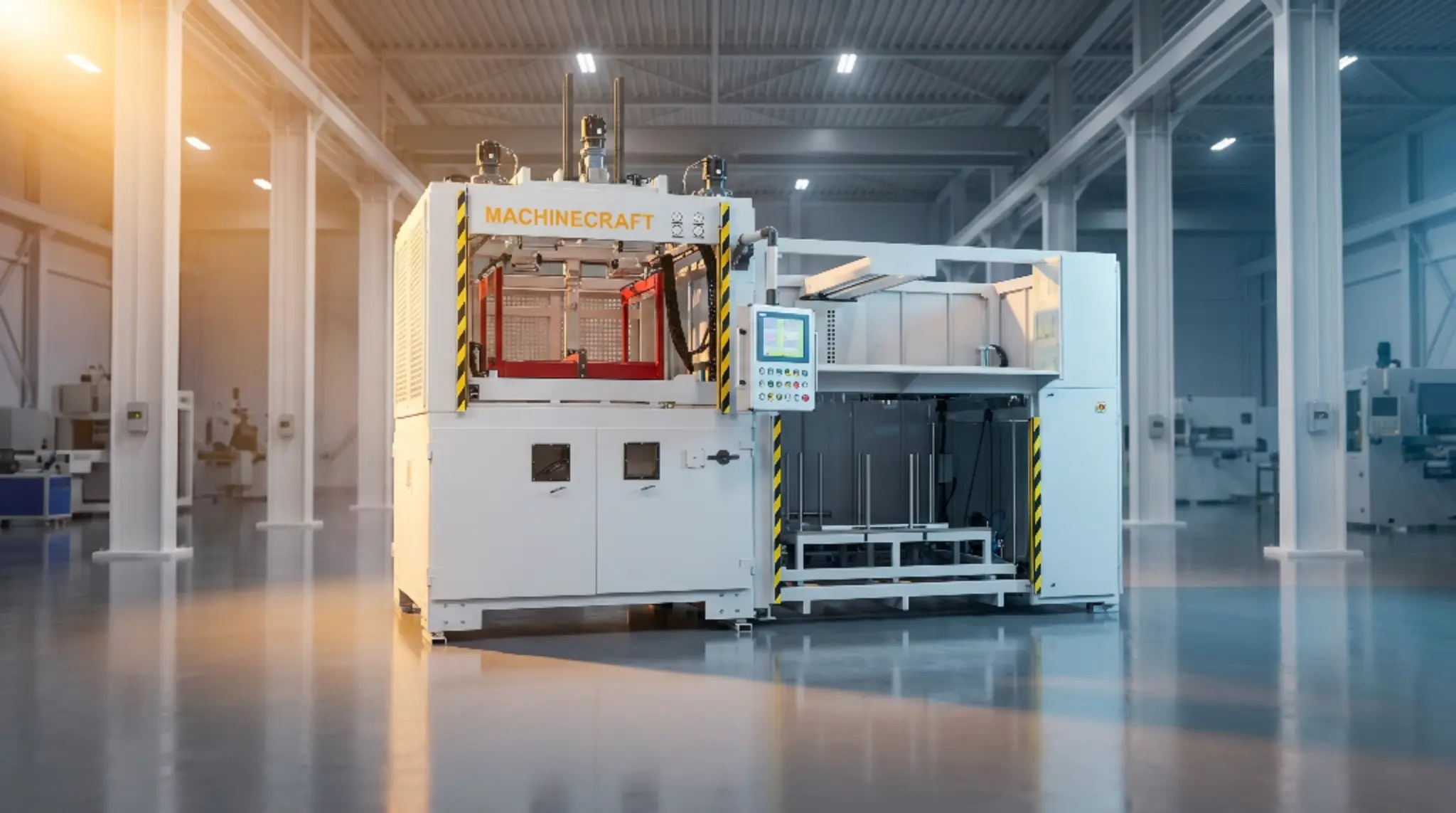
PF1-C uses pneumatic operation; PF1-X uses servo-driven table motion and closed-chamber forming. Large formats and dedicated bedliner configurations are separate options. Twin-sheet requirements are referred to engineering rather than assumed to be a standard PF1 capability.
Request a formal quotation after defining the configuration and delivery scope. Our optional part-economics worksheet estimates contribution before overheads from your assumptions; indicative payback is shown only if you enter your own quoted investment. It is not a production or profitability guarantee.
Discuss your part, material, dimensions, destination and production target →
Browse all archive entries