Food packaging trays portion, protect and present prepared or fresh foods. Review the tray drawing, material, forming route, tooling, trim and downstream sealing or packing together rather than assuming a machine or food-contact approval.
Review the roll-fed packaging forming route
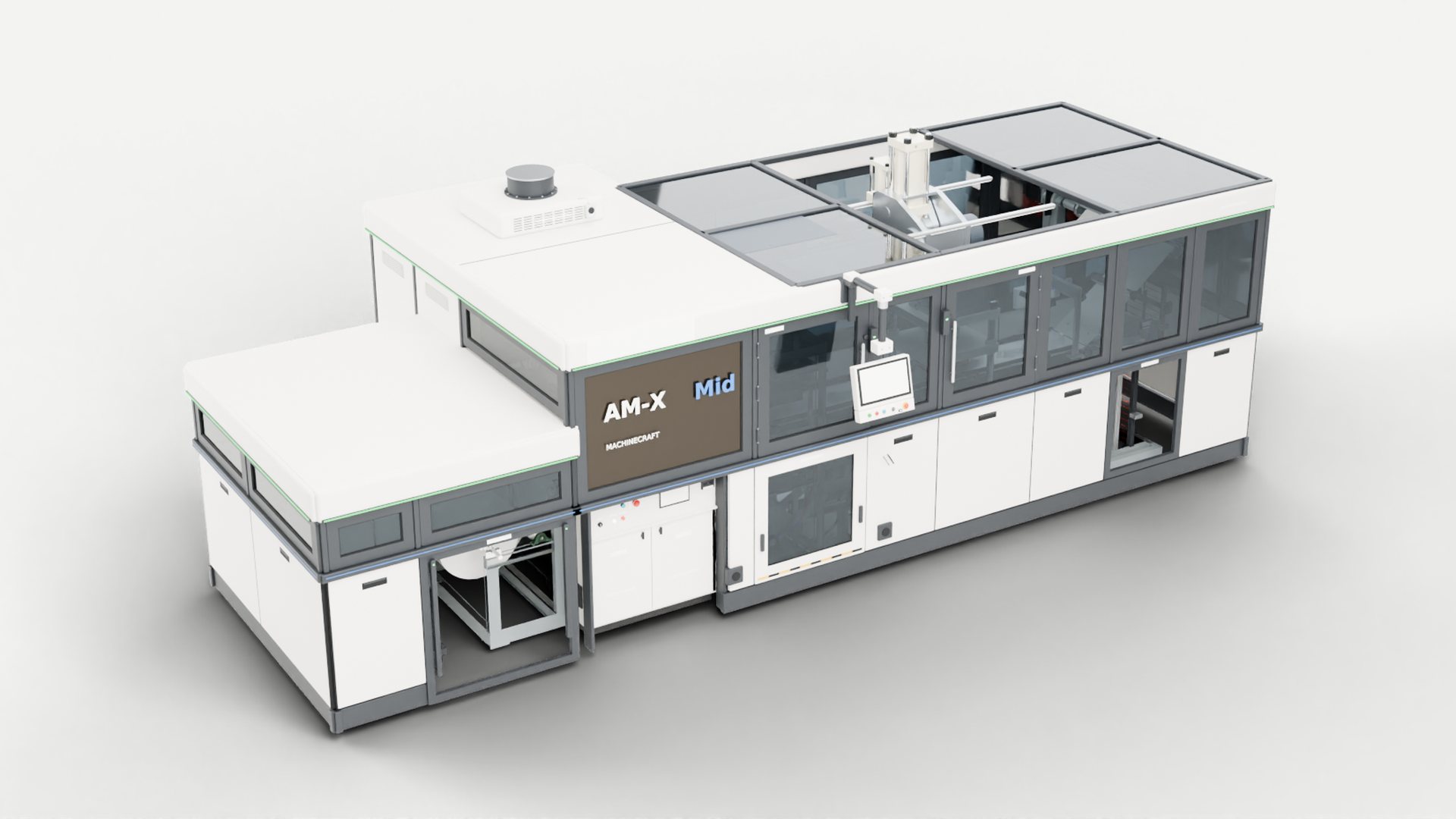
For thin-gauge packaging, review roll-fed vacuum or pressure forming around the actual tray, web, tool and material. The AM-X source distinguishes Eco vacuum forming from Mid pressure forming and describes inline trimming from the web. External sealing, lid attachment, secondary trimming, inspection, stacking and packing remain separate scope; no model, output or food-contact suitability is assumed.
Tooling
Share the tray drawing, cavity layout, nesting or index, tool type, draft, venting, material and gauge. Confirm the forming window, trim perimeter, release and any lid, hinge or sealing interfaces against the actual tool.
Sheet and part handling
Review roll loading and web indexing, heating and cooling support, skeleton take-up, formed-part outfeed, stacking and packing. Define operator access, changeovers and factory interfaces with the selected route; handling automation remains project-specific.
Trimming and downstream work
Inline forming-line trimming may separate parts from the web. Treat external sealing, lidding, label or print work, inspection, secondary contour trimming, packing and assembly as downstream requirements. Food-contact, cleaning and sterility evidence must come from the approved material and project review.
Review the existing AM-X packaging applicationsAM-X public application records provide advisory roll-fed packaging examples. Review the actual material, tool, forming route and downstream scope before selecting a machine.
Starting points for engineering review, not part-suitability, certification or output guarantees.