Loading Machinecraft…
Packaging blisters and medical-device trays protect, present or locate products in formed packaging. Start with the cavity layout, material, sealing method and downstream handling; an example does not establish pharmaceutical production, a sterile-barrier package or medical qualification.
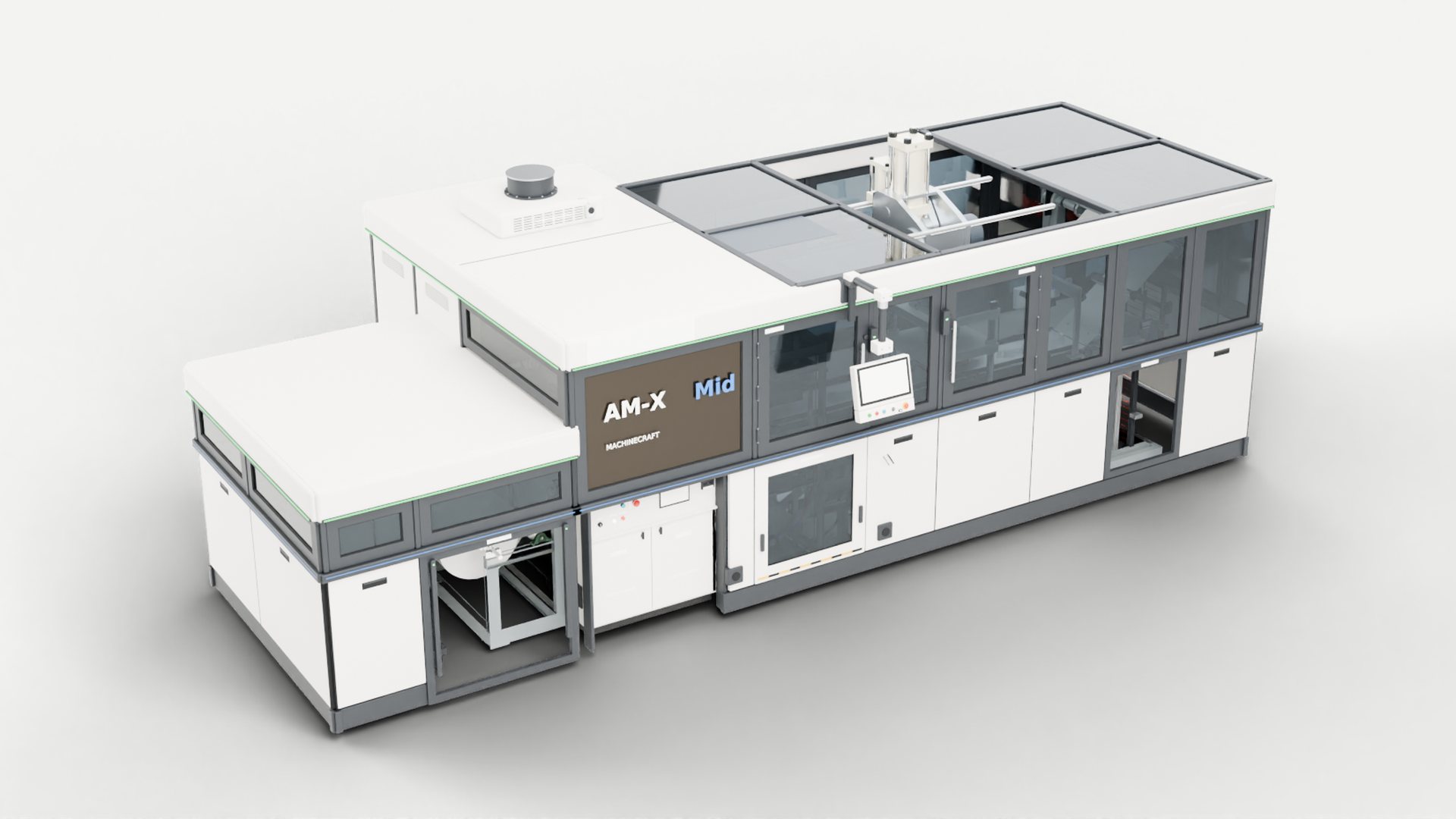
Review a roll-fed thin-gauge route for the blister or tray, then separate forming from any card sealing, lidding, denesting, inspection or pack-out. The supplied AM-X records distinguish vacuum forming from pressure forming, but their blister and medical-tray examples are advisory simulations, not a pharma recipe, capacity promise or qualification. Cut-sheet and twin-sheet routes require separate studies.
Share cavity layout, draft, depth, rim, web margin, venting, tool material and release approach. Confirm whether the tool is for roll-fed indexing or cut-sheet forming, and whether sealing or a second sheet sits outside the forming tool.
Define roll or sheet loading, web indexing, formed-web support, denesting, stacking and operator access. Keep cleanroom handling, controlled environments and product-contact controls as requirements for review, not as machine outcomes.
Separate perimeter punching or trimming, card or lidding seal, peel features, inspection, reject handling, packing and any sterilisation or assembly from forming. Validate the final pack and process with the responsible quality and regulatory teams.
The AM-X public records provide advisory examples of retail blisters and medical-device trays. They do not establish a pharmaceutical recipe, sterile-barrier package, cleanroom outcome, regulatory approval or exact model selection.
Starting points for engineering review, not part-suitability, certification or output guarantees.
Share the information you know. Detailed CAD stays private; unknown material, volume and dimensions remain unanswered.